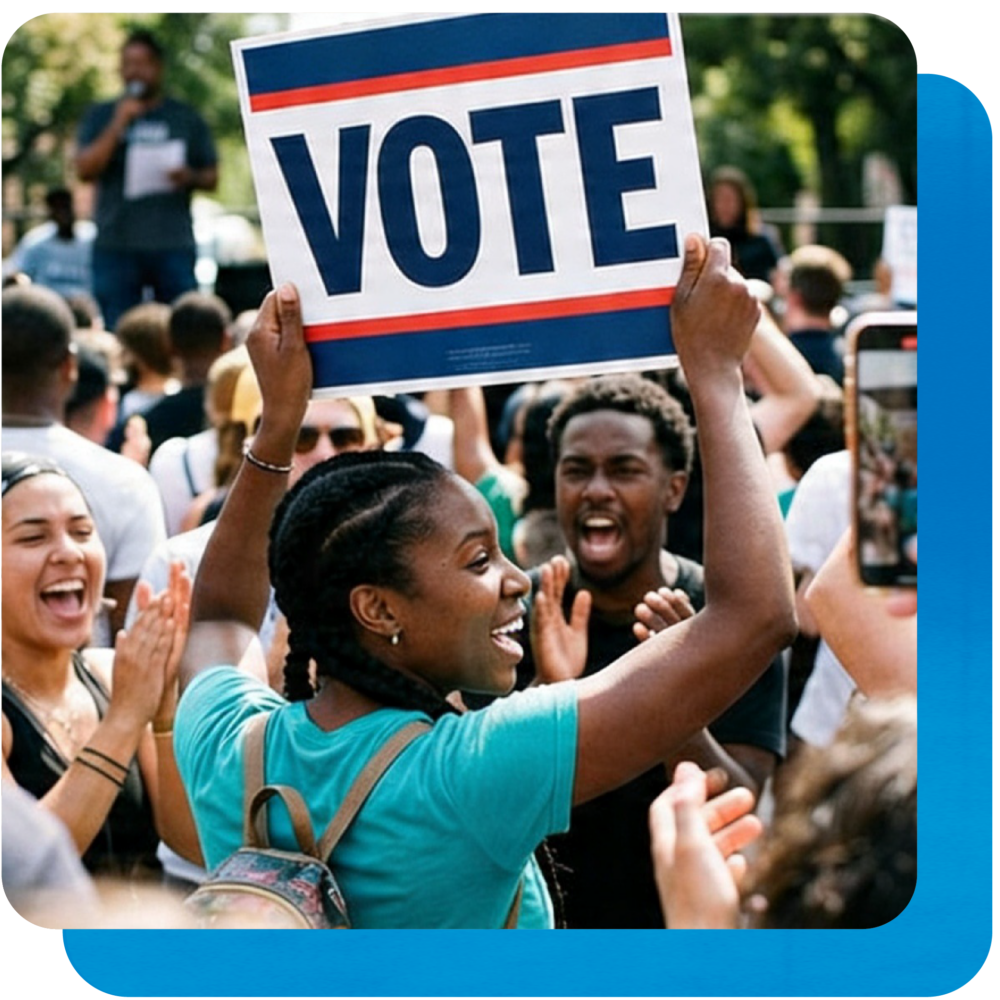
With fewer than 75 days until the 2026 midterms, campaigns and advocacy organizations are in the final stretch. Every voter contact program is racing to reach as many people as possible before Election Day, and the campaigns pulling ahead right now aren’t relying on a single channel to do it. They’re building a full-funnel outreach strategy, and phone banking is one of the most essential pieces of that strategy.
Email and text are common tools for this kind of outreach, but phone banking remains one of the most effective ways to move a voter or supporter to action. Below, we’ll cover what phone banking is, why it still works, and how ActBlue Field Tools makes it easy to run a phone banking program at scale.
What is phone banking?
Phone banking is the act of canvassing voters and supporters over the phone. Campaigns and organizations call voters and supporters to get out the vote, fundraise, or build support for a candidate or issue.
For example, volunteers phone banking with a campaign call voters to remind them of an upcoming election. During each call, volunteers work through a script provided by the campaign to keep messaging consistent. When the call wraps up, volunteers report back what they learned: whether the contact plans to vote or still needs more information to make an informed choice. The information gathered from this kind of outreach helps campaigns turn more supporters into voters.
Phone banking can be simple: a group of volunteers manually dialing a list of contacts, one at a time. Or it can be more robust: campaigns and advocacy groups using a phone banking tool to automatically dial dozens of numbers in just a few minutes. No matter the size of the operation, the goal is the same: have a meaningful conversation with each contact and inspire them to act.
Why phone banking still works
As Election Day gets closer, every hour counts, and phone banking remains one of the fastest ways to reach large numbers of voters in a short window of time.
Phone banking also reaches people other methods miss. Rural Americans, for example, have lower levels of technology ownership than people in urban or suburban areas. With less access to smartphones and computers, email and text can fall flat as outreach methods for some of these communities. Phone banking fills that gap, giving campaigns a reliable way to reach voters who might otherwise slip through the cracks.
Phone banking vs. texting
Getting someone to pick up can be tough, but that’s what makes the conversations that do happen so valuable. Once a contact is on the line, it’s a higher-touch, higher-quality engagement. Volunteers can answer questions in real time, respond to hesitation as it comes up, and build a level of trust and rapport that’s hard to replicate over text or email.
Texts are great for getting a quick message out, especially between people who already know each other. But a text from a stranger is easy to dismiss or ignore, and the conversation can drop off before it really starts. A phone call doesn’t give a contact that same easy out. It’s a real-time conversation, one where a volunteer can answer questions, address concerns, and get to the point rather than letting the exchange fizzle out unanswered.
Phone banking as part of a multi-channel outreach strategy
No single channel reaches everyone, and with the election clock running down, there’s less room to miss anyone. Phone banking’s real value shows up when it’s combined with other outreach, especially peer-to-peer texting. Texting can get someone’s attention quickly, but a phone call builds the trust and connection needed to move a contact from undecided to voting.
Used together, these tools cover each other’s gaps: a text that goes unanswered can be followed up with a call, and a call that goes to voicemail can be followed by a text. That kind of combined reach is what separates a program that covers its list from one that actually moves it, and it’s why the campaigns with the strongest ground games treat phone banking as core infrastructure, not an afterthought.
Using phone banking with ActBlue Field Tools
ActBlue Field Tools is a field organizing platform with everything campaigns and advocacy groups need to hit the ground running with outreach, including phone banking.
Phone banking with ActBlue Field Tools is built for campaigns and advocacy groups that want to manage and scale a robust phone banking program. With it, field organizing groups can:
- Call dozens of contacts per hour with predictive dialing
- Minimize dropped calls and maximize volunteer efficiency, driving 20+ conversations per hour instead of two
- Guide volunteers through conversations with interactive scripts
- Automatically gather data as volunteers navigate each call
- Phone bank on the go with the first fully operational phone banking tool available on mobile phones
- Enjoy a simple, easy-to-use interface for both admins and volunteers
Despite the speed and reach of texting and email, phone banking isn’t going anywhere. It’s the best way to reach people who prefer calls over text or don’t have stable access to email or mobile phones, and with the midterms fast approaching, there’s no time to rely on a single outreach method. Get started with ActBlue Field Tools today.
This post is provided for general informational purposes only and does not constitute legal advice. Campaign practices — including voter contact, data use, and fundraising — are governed by federal, state, and local law that varies by jurisdiction and changes over time. You are responsible for your campaign’s compliance. Consult your own legal counsel with legal questions.
Built for you. Built to win.
- Fundraising
- Field Tools
- Website Builder