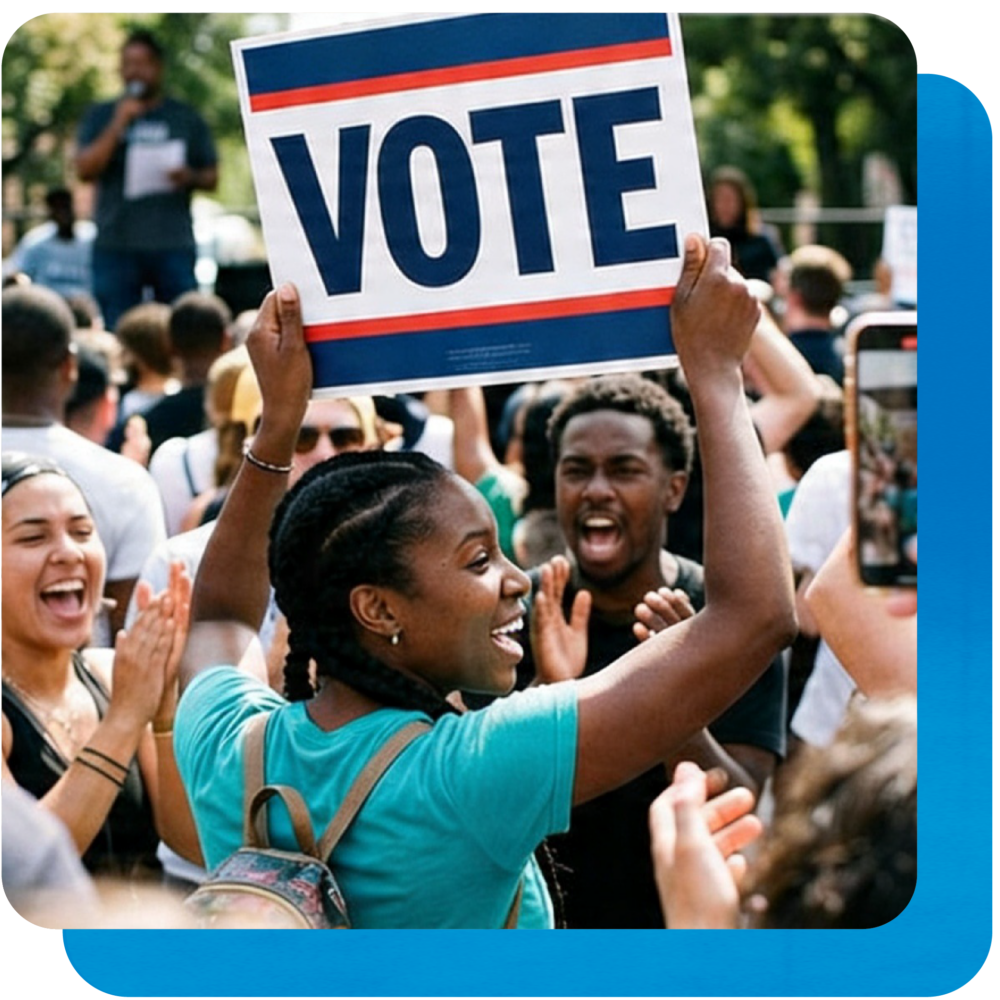
Labor Day marks an important shift for many campaigns. With Election Day about two months away, field programs that may have been focused on persuasion, volunteer recruitment, voter registration, or general voter contact start turning their attention toward turnout.
The final stretch can be demanding. Your team is working with less time, volunteers are becoming increasingly important, and the number of voters who need to be contacted can grow quickly. The good news is that a solid GOTV program can bring some structure to that work.
Rather than a single tactic that kicks off during the final week, GOTV is a process that builds throughout the final two months of your campaign. Your team needs time to identify the people you want to reach, organize your data, recruit volunteers, establish your outreach programs, and create a system for following up with voters.
Here’s a helpful guide on how to structure that time.
60-45 days out: build your GOTV program
Two months out, your campaign should begin transitioning from general voter contact to a more defined turnout program. You don’t need every detail finalized yet, but this is the time to establish the basic structure you’ll rely on during the final weeks.
Define your GOTV universe
Start by identifying the people your campaign expects to prioritize for turnout. Depending on your campaign and available data, that might include:
- Supporters
- People who have expressed an intention to vote
- Lower-propensity supporters
- People who have engaged with previous campaign outreach
- People who have not responded to previous outreach
- Volunteers
- Event attendees
- People who have requested additional information
Look at what you already know about these groups. Your campaign has likely spent months collecting information through conversations, events, volunteer activity, texting, phone banking, and other forms of outreach; this information can help you determine who needs to hear from you, what they need to hear, and how often you should follow up.
Set your contact goals
Once you know who you’re trying to reach, establish some basic goals for your GOTV program. Think about:
- How many voters do you need to contact?
- How many contact attempts do you expect to make?
- Which voters should receive multiple contacts?
- Which channels will you use?
- How many volunteers will you need?
- How many shifts will you need to fill?
You don’t need to predict everything perfectly; at this point, it’s more about understanding the scale of the program you’re building so you can identify gaps early.
Start recruiting GOTV volunteers
Volunteer recruitment should start well before your busiest weeks. Give people a clear idea of what you’re asking them to do and how much time they’ll need to commit. Your GOTV program may eventually include:
- Phone banking shifts
- Peer-to-peer texting shifts
- Voter registration outreach
- Volunteer recruitment
- Event support
- Election Day shifts
Consider creating different kinds of opportunities so people can participate according to their availability and comfort level.
45-30 days out: expand your contact program
As you move into October, your voter contact program should become more active. This is a good time to expand your use of the channels that will carry the bulk of your GOTV outreach.
Build your texting program
Peer-to-peer texting can help your campaign have individual conversations with voters at scale. During this period, you might use it to:
- Identify supporters
- Recruit volunteers
- Share voting information
- Ask supporters to make a voting plan
- Follow up with people who have previously engaged
- Identify people who need additional contact
Broadcast texting can be useful when you need to share the same timely information with a larger audience, such as an upcoming deadline, event information, or volunteer opportunity.
The two approaches can (and should) work together. A broadcast message reaches larger groups, while peer-to-peer texting gives your team an opportunity to respond to people individually.
Establish a regular phone banking program
Phone banking can provide a different kind of voter contact than texting. It gives volunteers an opportunity to have a longer conversation, answer questions, and collect information that can inform later outreach.
Use this period to establish a regular cadence of phone banking shifts rather than waiting until the final week.
Give volunteers clear scripts and make sure they know how to record the information they collect. Responses might include:
- Someone wants more information
- Someone is interested in volunteering
- Someone wants to be contacted again
- Someone has already taken an action
- Someone has a question that requires follow-up
You want to make sure the information from those conversations can actually be used by your team.
Create your follow-up workflows
As the volume of voter contact increases, so does the amount of information your campaign collects. Before that happens, determine what your team will do with common responses. For example:
- Someone wants to volunteer: Make sure the person enters your volunteer recruitment workflow.
- Someone asks for more information: Record the request and establish who will follow up.
- Someone wants another contact: Make sure your team has a way to flag that person.
- Someone has already voted: Update their record so they don’t continue receiving unnecessary GOTV outreach.
Having these processes in place before the final weeks will make your program much easier to manage.
30-14 days out: increase contact and prepare for GOTV
At one month out, your campaign should be moving from building the program to using it consistently. Your voter contact should become more targeted, your volunteer program should be expanding, and your team should be paying close attention to the information coming back from voters.
Review and refine your lists
Look at what your campaign has learned since Labor Day. You may have new information about:
- Who has responded to outreach
- Who has volunteered
- Who has asked for follow-up
- Who has attended events
- Who has indicated that they plan to vote
- Who has not responded to previous outreach
Use that information to refine your GOTV universe. Your goal is to make sure your team knows enough about the people you’re contacting to determine what kind of outreach makes sense.
Collect voting plans
As Election Day gets closer, start asking supporters to think through when and how they intend to vote. Depending on your campaign’s goals, you might collect information about:
- Whether someone plans to vote early
- Whether they plan to vote by mail
- Whether they plan to vote on Election Day
- Whether they need additional voting information
- Whether there are other barriers they need help navigating
Custom forms can provide one way to collect this information at scale.
Remember, follow-up matters. If someone indicates that they need additional information, your team should have a clear process for responding.
Continue building your volunteer bench
Your volunteer needs will increase as Election Day approaches, so keep recruiting volunteers even if your program is already underway. Some people will have been volunteering for months; others may only become available closer to Election Day. Make it easy for both groups to find a way to participate.
14-7 days out: move into full GOTV
Two weeks out, your campaign should be shifting its attention toward the people who still need to be reached and the actions that need to happen before Election Day. At this point, your voter contact program should be operating regularly rather than being something your team is still setting up.
Increase the frequency of voter contact
Your campaign may need to contact some voters more than once during the final two weeks.
Use your data to determine where additional contact makes sense. People who have already responded may need different outreach from people who have never engaged. Your final GOTV program should include:
- Peer-to-peer texting
- Broadcast texting
- Phone banking
- Follow-up with people who have requested information
- Volunteer recruitment
- Voting plan follow-up
Coordinate these channels so that your team isn’t treating every contact as an isolated interaction.
Make it easy for volunteers to participate
Volunteer capacity becomes particularly important during this period. Give volunteers specific assignments that are easy to understand and complete, like:
- Make a phone banking shift
- Complete a texting shift
- Follow up with a list of supporters
- Recruit additional volunteers
- Help with an event
- Sign up for an Election Day shift
Make sure volunteers know where to record responses and where to go when they need help.
Final 7 days: focus on execution
The final week is when the work you’ve been building toward becomes most visible.
Your campaign should have its audiences identified, its volunteer program operating, and its communication channels ready. Now the priority is reaching the people who still need contact and making sure your team can respond to what it learns.
Prioritize your remaining contacts
Use your campaign’s data to determine who still needs to hear from you.
Your team may be working with people who:
- Haven’t responded to previous outreach
- Have asked for additional information
- Have indicated that they need follow-up
- Have volunteered but haven’t yet signed up for a shift
- Have not yet provided a voting plan
- Need another reminder about voting logistics
Make sure the people doing outreach can see the relevant information about each person. This becomes particularly important when multiple staff members and volunteers are contacting the same universe.
Coordinate your channels
Your final week may involve several different forms of voter contact. For example:
- Broadcast texting can distribute timely information to a large audience.
- Peer-to-peer texting can give volunteers a way to have individual conversations.
- Phone banking can provide more personal follow-up.
- Custom forms can collect information that helps your team determine what happens next.
The specific combination will depend on your campaign, but the channels should work toward the same overall GOTV goals.
Support your volunteers
The final week can be demanding for volunteers as well as staff.
Give people the information they need to do their jobs confidently. Make sure they know what to do when someone asks a question, where to record responses, and who to contact when they need help.
A volunteer who knows exactly what they’re being asked to do is much easier for your team to support than someone who has to figure out the process on their own.
Election Day: keep the focus on your voters
By Election Day, your team has spent months preparing for this moment.
Keep your processes as straightforward as possible.
Make sure everyone knows:
- Who they are responsible for contacting
- Which communication channel they’re using
- How to record responses
- Where to send questions
- Who is responsible for follow-up
- How volunteers can get help
Your team will almost certainly encounter things you didn’t anticipate. A voter will ask a question that isn’t in the script. A volunteer will need assistance. Information may change during the day.
That’s part of campaign work. What matters is having enough structure in place that your team can respond without losing track of the people you’re trying to reach.
Building your GOTV program with ActBlue Field Tools
Your GOTV program may involve thousands of individual interactions between voters, volunteers, and campaign staff. Managing those conversations while coordinating volunteers and handling the rest of the campaign can become increasingly difficult as Election Day approaches.
ActBlue Field Tools provides campaigns with tools for peer-to-peer and broadcast texting, phone banking, voter registration, and custom forms. You can use these tools individually or combine them as part of a larger voter contact program.
For example, your campaign might use:
- Broadcast texting to share timely information with a larger audience
- Peer-to-peer texting to have individual conversations with voters
- Phone banking for more detailed outreach and follow-up
- Custom forms to collect information from supporters and volunteers
Because there’s no licensing fee for Field Tools, campaigns can build their GOTV programs around the activities that make sense for their teams and pay based on usage.
The final weeks of a campaign can be demanding. A thoughtful GOTV plan won’t eliminate that pressure, but it can give your team a clearer understanding of what needs to happen, when it needs to happen, and how everyone can contribute.
Start building your GOTV program with ActBlue Field Tools today. Get started today.
This post is provided for general informational purposes only and does not constitute legal advice. Campaign practices — including voter contact, data use, and fundraising — are governed by federal, state, and local law that varies by jurisdiction and changes over time. You are responsible for your campaign’s compliance. Consult your own legal counsel with legal questions.
Built for you. Built to win.
- Fundraising
- Field Tools
- Website Builder