Anderson Clayton, Chair of the North Carolina Democratic Party, on building power from the bottom of the ballot up
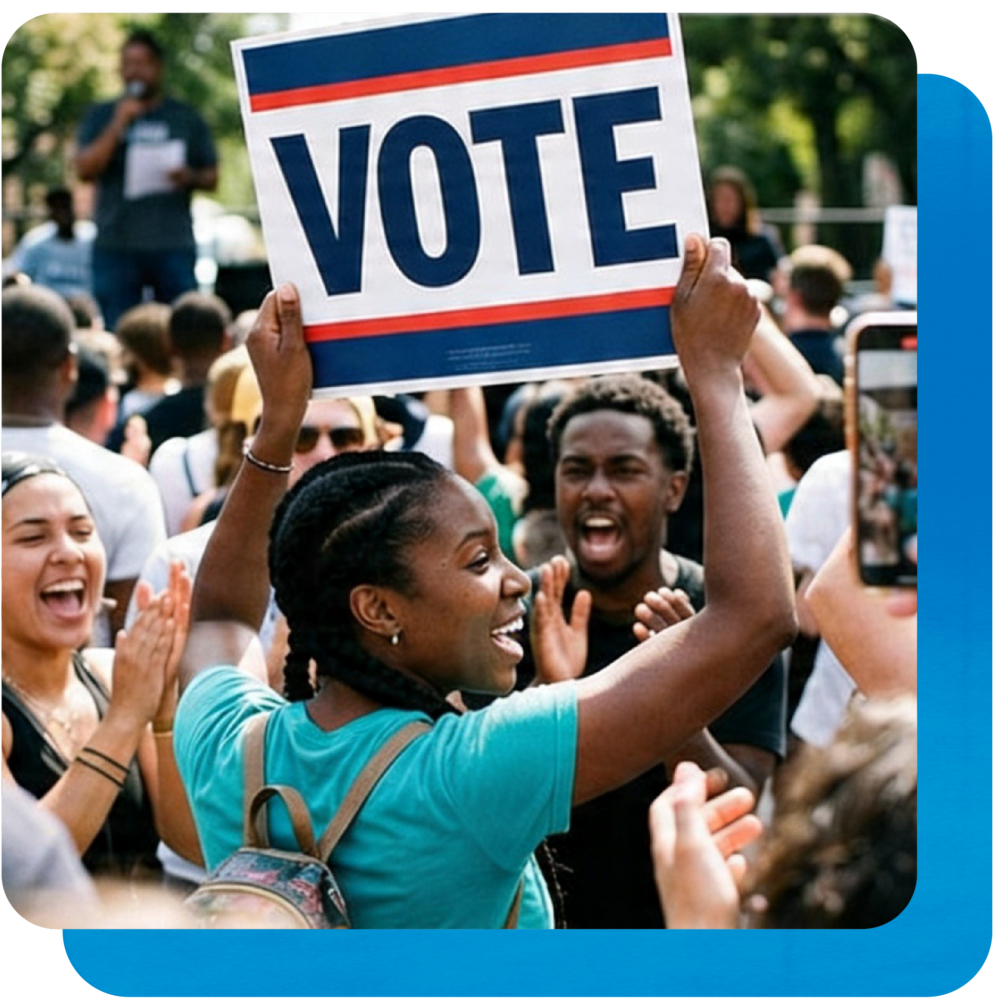
Anderson Clayton’s organizing career started with a fight over a campus early voting site. In 2016, as a student at Appalachian State University, she watched people across generations rally to keep it open after the Republican-led county elections board pushed to move voting off campus. The efforts to keep it open worked, and the site stayed at the student union. That year, she says, 5,000 new students registered to vote, and Watauga County flipped back to blue after voting red in 2012.
Ten years later, as state party chair, she says Republicans who control election boards across North Carolina still try to limit college students’ access to the ballot. For Clayton, the lesson of 2016 still holds: when neighbors organize together, they can transform their communities and move the numbers enough to decide races, especially the ones won at the margins.
That’s why Clayton puts so much weight on local races. “When you get closer to the bottom of the ballot, you get closer to your front door,” she says. For decades, she argues, parties and the national media have told voters to look up to the presidency. But it’s the school boards, county budgets, and state legislatures that shape daily life far more directly – from what kids learn to what teachers are paid.
Turning Frustration Into Action
Local races, she notes, are often won or lost by as little as 20 to 30 votes. Margins like that make turnout everything. Too many Democrats sat out 2024, and frustration alone won’t get people to the polls. “We lost it to the couch,” she says.
So she’s been visiting college campuses like Duke University and Shaw University, giving students one simple task: hand out a box of voting literature and encourage people to vote.. She reminds them that Democrats won the state Supreme Court race in 2024 by just 734 votes, so every conversation counts.
The young people she’s meeting, along with her staff, are what give her hope heading into November. “I’m just excited to see blue all over the map,” she says.
What You Can Do Right Now
Clayton says down-ballot races, including the state’s judicial contests, will shape North Carolina for years, and the courts could determine the future of redistricting. Her advice: find a group you care about and volunteer, whether that’s your county Democratic Party, a national organization like Indivisible, or a state-focused group like Down Home North Carolina.
From registering voters to canvassing for local candidates, the movements that change our communities are built by everyday people who decide to act. With so much on the line this November, the work done in the final days before the election will make the difference.
##
Before Election Day, pick one way to get involved, from volunteering to supporting a candidate in the ActBlue directory, and invite someone to join you.
Never miss a blog post!
Get updates on what’s happening at ActBlue, straight from the source
Built for you. Built to win.
- Fundraising
- Field Tools
- Website Builder