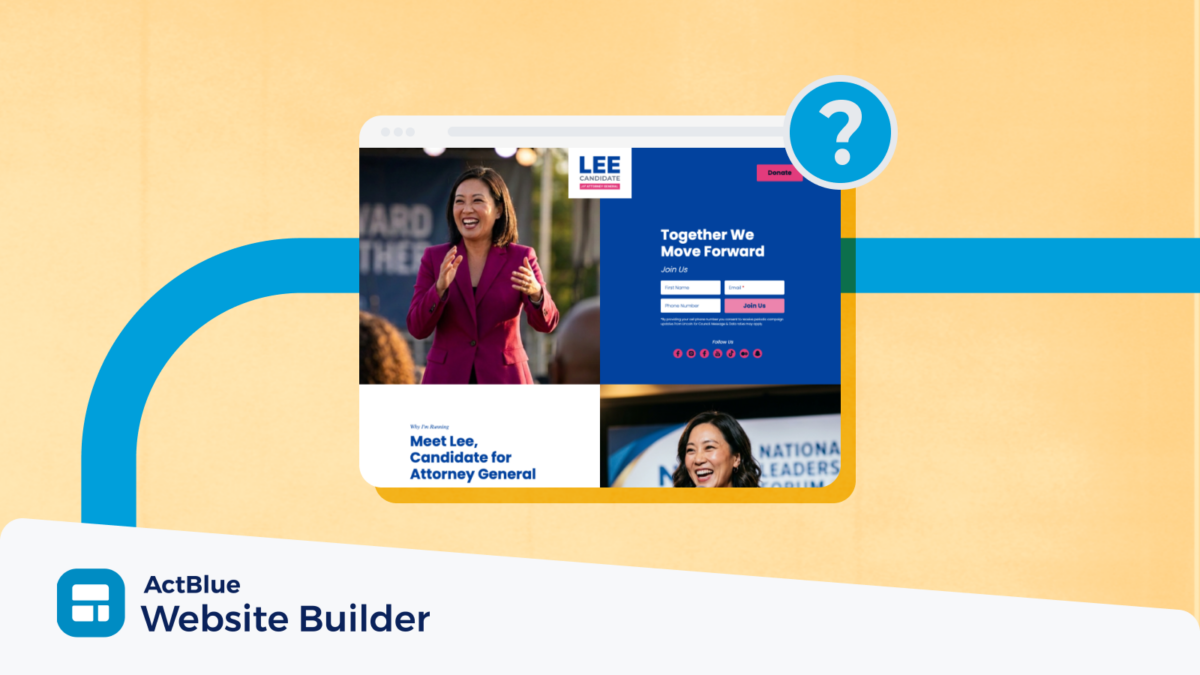
Whether you’re running for city council, school board, or state legislature, your campaign website is one of your first big decisions. The midterms are here, and candidates who get online early have a real advantage: more time to fundraise, more time to build name recognition, and more time to focus on what’s most important: their voters.
Most first-time candidates don’t give too much thought to the website builder they’ll use, only to waste a weekend fighting with one that wasn’t built for campaigns. So before you default to the most familiar name you can think of (like Squarespace, Wix, WordPress), here are a few things worth knowing.
Generic website builders fall short for campaigns
Generic website builders were designed for small businesses, freelancers, and bloggers. They’re polished, affordable, and genuinely easy to use for the thing they were built to do.
A campaign website has a completely different job. It needs to introduce you as a candidate, earn voter trust, collect donations, recruit volunteers, and communicate your platform, all while meeting legal requirements that regular business sites never have to think about. That’s a tall order for a tool designed with a coffee or flower shop owner in mind!
Here’s where the gap really shows up:
The templates aren’t built for ballots. Generic builder templates are beautiful for restaurants, photographers, and SaaS companies. Adapting one for a political campaign means swapping out portfolio sections for issue pages, reworking e-commerce flows into volunteer sign-ups, and making design choices that would normally require someone with real experience. All of that takes time that you genuinely don’t have.
Fundraising integration doesn’t come with the package. Getting donations online is the whole point of your campaign website, and generic builders don’t come with built-in connections to political fundraising platforms. That means you (or a volunteer) will need to figure out how to embed a donation form, set up compliant payment processing, and maintain the whole thing on top of everything else you’re already managing. With a campaign website builder, fundraising is baked in from the start, because that’s what it was designed for.
They’re optimized for the wrong audience. When a voter lands on your site, they need to feel within seconds that you’re a serious candidate who’s ready to lead. Generic builders optimize for consumer conversions and brand trust. Campaign-specific builders are built to do what actually matters: make voters feel confident in you. Those are different problems with different solutions.
What a campaign website builder actually gets you
A campaign website builder starts from a totally different premise. It assumes you’re a candidate, not a developer. Everything is built around that.
Templates that already know what a campaign needs. Issue pages, endorsement sections, volunteer sign-up forms, donation CTAs: they’re all already there. You’re starting from a structure that already understands your goals, which is how you go from signing up to launch-ready in a single afternoon rather than a full weekend.
A website voters will actually trust. Campaign website builders are optimized for the things that make voters take you seriously: fast load times, mobile performance (because most people will see your site on their phone), accessibility compliance, and clear design that moves people toward action. You don’t have to audit your site for any of this, because it’s built in by default.
Tools that work together. If you’re running as a Democrat, you’re almost certainly using ActBlue (or Raise) to collect donations. A campaign website builder built by ActBlue connects your website and your fundraising platform so they’re part of the same ecosystem, rather than two separate systems you’re trying to make talk to each other. That’s one fewer integration to set up and one fewer thing that can break on a fundraising deadline.
Built for people who are running campaigns, not IT departments. The best campaign website builders don’t assume you have technical skills. They’re designed for candidates who are doing it all themselves, with no agency, no developer, and no tech-savvy volunteer on call. Drag-and-drop editing, intuitive setup, and support that actually speaks your language.
The cost of picking the wrong tool
Choosing a generic builder might seem like the safer, simpler bet. But the hidden costs tend to show up right when you can least afford them.
Donations you didn’t know you were losing. Every hour your site is live without an optimized donation experience is potential fundraising that’s just not happening. Generic builders need manual integration with political fundraising platforms, and that integration can break, load slowly, or just not be tuned for political giving behavior. Campaign website builders are built to capture donations from day one.
Hours you spent that you’ll never get back. Generic builders look simple until you try to make them do something they weren’t designed for. Plenty of first-time candidates have lost entire weekends wrestling with templates and troubleshooting plugins. That’s time better spent on doors, calls, and community relationships.
First impressions you can’t redo. Voters form opinions about candidates fast. A website that looks generic, loads slowly on mobile, or doesn’t have the right information sends a signal, even when it doesn’t reflect who you actually are. Starting with a purpose-built campaign template means your site looks the part from the very first visit.
ActBlue Website Builder was made for campaigns like yours
ActBlue Website Builder (formerly Hey Victor) was built specifically for Democratic candidates running at every level, from city council to state senate. The templates, the features, the integrations, the pricing: all of it was designed with down-ballot candidates in mind.
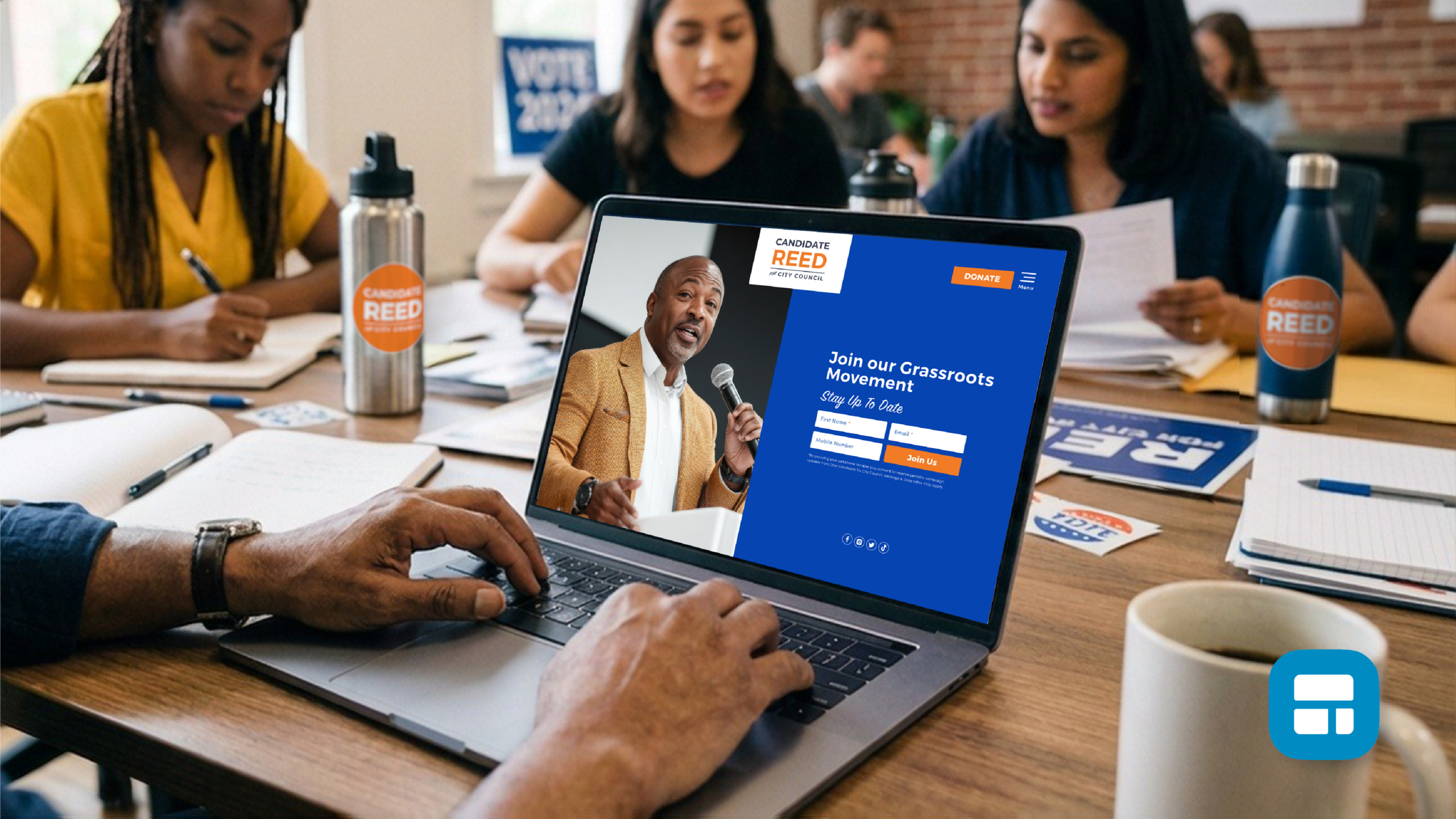
At $40/month, it’s affordable for campaigns working with real-world budgets. And affordable doesn’t mean basic, either: Website Builder gives you professionally designed, fully accessible, high-performance campaign websites that plug directly into ActBlue’s fundraising infrastructure, the same infrastructure that powers Democratic campaigns all across the country. Schedule a demo to learn more.
The bottom line
Generic website builders are built for businesses. Campaign website builders are built for candidates. You might not feel the difference now, but you will until you’re a few weeks out from your primary and spending time you don’t have fixing an integration that was never designed to do what you needed.
You’re running because you want to make a difference. Start with tools that are as serious about that as you are.
Ready to get your campaign online? Launch your website with ActBlue Website Builder today.
Never miss a blog post!
Built for you. Built to win.
- Fundraising
- Field Tools
- Website Builder